
Connect Google Gemini AI and Jira Cloud Platform integrations
Transform AI-powered insights into action by connecting Google Gemini AI with Jira Cloud Platform. Automatically convert intelligent analysis, content generation, and data insights into updated tasks, categorized issues, and AI-powered project descriptions—optimizing your workflow from insight to execution without lifting a finger.

Triggers when a long running task has finished.

Adds a new attachment to a ticket.
Adds a comment to an issue.
Adds a user as a watcher to an issue.
Assigns an issue to a user.
Creates a component.
Creates a new issue.
Creates an issue link.
Creates a project version.
Creates options for a custom select field.
Deletes a Component.
Deletes an attachment.
Deletes an issue.
Deletes a commnet on a specific issue.
Deletes an issue link.
Deletes a project version.
Deletes a user as a watcher of an issue.
Deletes a custom field option.
Downloads an attachment.
Returns the details for an issue.
Returns an issue comment.
Performs an arbitrary authorized API call.
Changes the order of custom field options or cascading options in a context.
Updates a component.
Updates an existing issue.
Updates a comment to a specific issue.
Updates an issue status.
Updates a project version.
Updates the options of a custom field.
Returns a list of all the options of a select list issue field.
Retrieves changelog of an issue.
Lists current available transitions in an issue.
Returns all comments for an issue.
Returns the watchers for an issue.
Retrieves project components.
Retrieves all versions in a project.
Retrieves all users (active and inactive).
Searches for issues.
Searches for users by query.
Trusted by thousands of fast-scaling organizations around the globe





Automate your work. Build something new.
Just drag and drop apps to automate existing workflows or build new complex processes. Solve problems across all areas and teams.
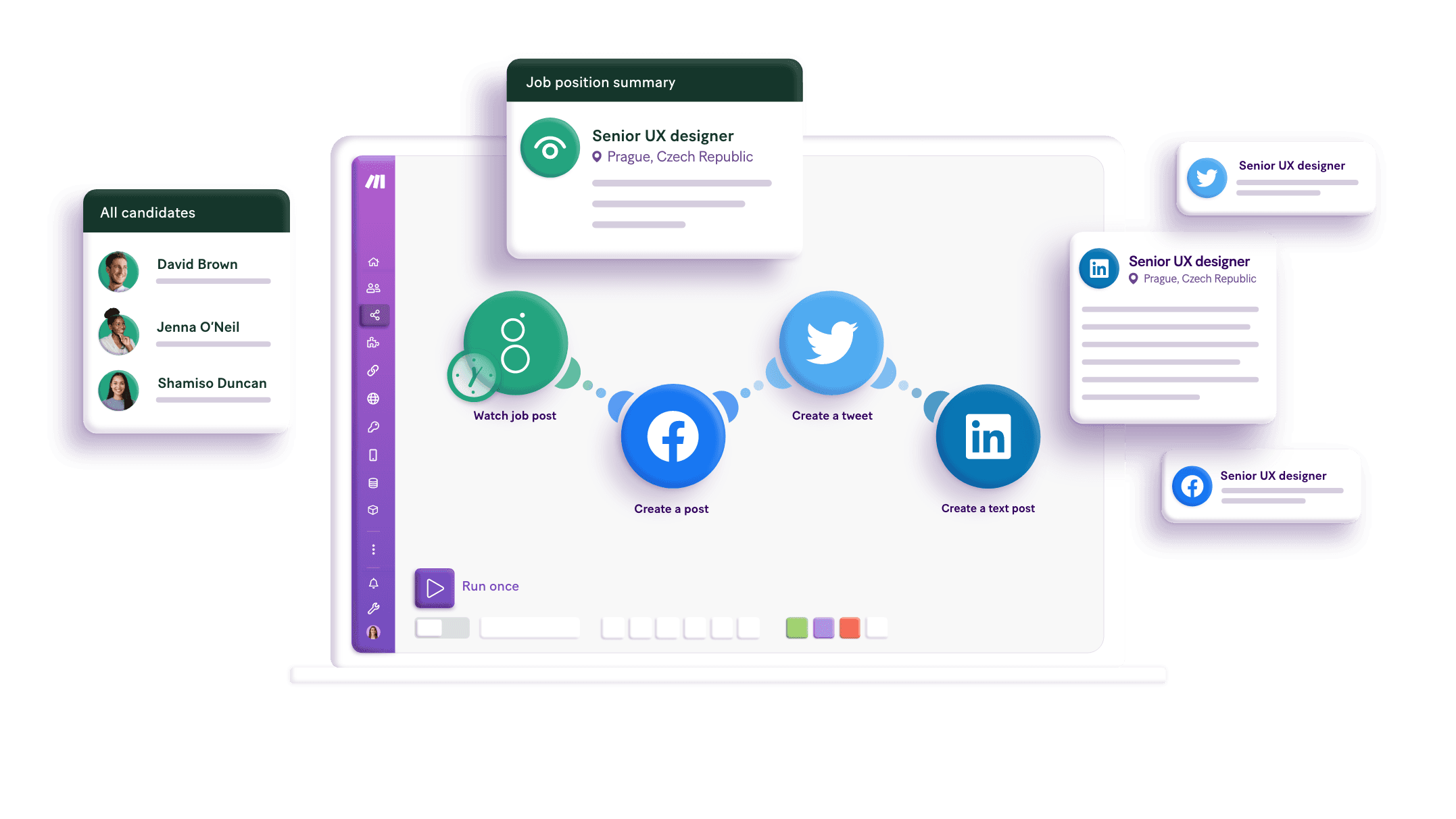
Build your Google Gemini AI and Jira Cloud Platform integrations.
Jira Cloud Platform serves as a trigger to initiate automated workflows when it generates intelligent insights, analyzes project data, or creates content. Once triggered, Google Gemini AI functions as the action by automatically updating tasks and tickets, creating AI-powered project descriptions, or categorizing and assigning issues based on the content analysis from Jira Cloud Platform. This integration enables automatic updates from Jira Cloud Platform's outputs directly into Google Gemini AI's project management system, transforming how data flows between AI-generated content and task management.
Adds a user as a watcher to an issue.
Adds a new attachment to a ticket.
Adds a comment to an issue.
Assigns an issue to a user.
Creates options for a custom select field.
Creates a component.
Creates a project version.
Creates a new file search store.
Creates a new issue.
Popular Google Gemini AI and Jira Cloud Platform workflows.
Looking to get more out of Google Gemini AI and Jira Cloud Platform? With Make you can visually integrate Google Gemini AI and Jira Cloud Platform into any workflow to save time and resources — no coding required. Try any of these templates in just a few clicks.
How to setup Google Gemini AI and Jira Cloud Platform in 5 easy steps
Set up your Google Cloud project
Before you can connect Google Gemini AI to Make, you need to create a project in Google Cloud Platform. Log in with your Google credentials, click 'Create or select a project,' then choose 'New project.' Give it a name and click 'Create.' This project acts as a foundation that allows Google Gemini AI and Make to communicate securely with each other. Make sure your new project is selected in the dropdown menu at the top of the page before moving forward.
Get your Google Gemini AI API key
After creating your Google Cloud project, you'll need an API key from Google AI Studio. Log into Google AI Studio, click 'Get API key,' then select 'Create API key' and choose your existing Google Cloud project from the list. Once your API key is generated, copy it immediately and store it somewhere safe. Think of this key as a special password that allows Make to securely access your Google Gemini AI account.
Connect Google Gemini AI to Make
Now you can establish the connection in Make. Log into your Make account, add a Google Gemini AI module to your scenario, and click 'Create a connection.' You can give your connection a name to help you remember it later. Paste the API key you copied from Google AI Studio into the API Key field, then click 'Save.' Your connection is now active and ready to use in your automation workflows.
Generate and connect your JIRA API token
To connect JIRA to Make, visit the Atlassian API token management page and log in with your JIRA credentials. Click 'Create API token,' give it a descriptive label, and copy the token immediately to store it safely. In Make, add a JIRA Cloud Platform module to your scenario and click 'Add' next to the Connection field. Enter your JIRA site address, username, and the API token you just copied, then click 'Save' to complete the connection.
Test your connections and start automating
After setting up both connections, it's important to test them. Add modules from each app to a scenario and run simple tests—like retrieving a JIRA ticket or sending a prompt to Google Gemini AI—to confirm everything works properly. Once your tests are successful, you can start building powerful automations between the two apps. For example, you could use Google Gemini AI to analyze text and automatically create JIRA tickets based on the results, all without any coding required.
Improve project management with AI-powered Jira automation
Optimize your workflow by connecting Google Gemini AI with Jira Cloud Platform. Automatically create tickets, enrich issues, generate reports, and receive intelligent recommendations to improve productivity.
Automatically generate and create Jira tickets based on insights, summaries, or action items identified by Google Gemini AI from various data sources.
Use Gemini AI to automatically analyze, categorize, and add relevant context to Jira issues with tags and priority suggestions for better project management.
Automatically generate comprehensive sprint reports, retrospective summaries, and project status updates by having Gemini AI analyze Jira data and metrics.
Use Gemini AI to automatically draft detailed issue descriptions, technical specifications, or response comments based on existing Jira ticket information.
![The Easiest Way to Integrate GitHub and Jira [Step-by-Step Guide]](/_next/image?url=https%3A%2F%2Fwww.make.com%2F_next%2Fimage%3Furl%3Dhttps%253A%252F%252Fimages.ctfassets.net%252Fun655fb9wln6%252Fblog-image-4234%252F11db22f2933d7fd503b9d03019ab1243%252Fgithub-jira-integration.png%26w%3D1920%26q%3D75&w=3840&q=75)

FAQ
By integrating Google Gemini AI with Jira Cloud Platform through Make, you can automate intelligent task creation, generate comprehensive project descriptions, and automatically summarize complex issues. Gemini can analyze incoming requests or comments and create properly formatted Jira tickets, generate sprint summaries, or even draft technical documentation based on ticket information. This integration eliminates manual data entry, ensures consistent ticket quality, and allows your team to focus on actual problem-solving rather than administrative tasks.
Make enables powerful automation scenarios between Google Gemini AI and Jira Cloud Platform, such as: automatically generating detailed bug reports from brief descriptions, creating user stories with acceptance criteria from feature requests, translating Jira tickets into multiple languages for global teams, analyzing ticket sentiment to prioritize urgent issues, generating release notes from completed sprints, and creating comprehensive project status reports. These automations run in the background without requiring any coding knowledge, saving hours of manual work weekly.
Not at all! Make's visual workflow builder makes it straightforward to connect Google Gemini AI with Jira Cloud Platform without any coding required. You simply drag and drop modules, authenticate your accounts with a few clicks, and configure what data flows between the applications. Make provides pre-built templates specifically for AI and project management integrations that you can customize to your needs. Most users can create their first working automation in under 15 minutes, and Make's extensive documentation and active community are always available to help.
Make offers significant advantages over custom development or native integrations. Unlike building custom solutions that require developers, ongoing maintenance, and hosting costs, Make provides a ready-to-use platform with no coding required and automatic updates. While Jira's native integrations are limited, Make connects to over 1,500 applications, allowing you to extend your workflow beyond just these two tools. You also get advanced features like error handling, scheduling, data transformation, and detailed execution logs. Make's free tier lets you start automating immediately, and you only pay as you scale, making it far more cost-effective than hiring developers or purchasing expensive enterprise integration tools.
A scenario represents a workflow or a project of your own creation, and it is made up of a series of modules that automate apps and services. Creating a scenario allows you to transfer and transform data between apps and services via these modules to automate anything and improve the way you work.
Modules are the main building blocks of automation in Make. Modules represent actions that Make performs with an app, like creating, updating, or deleting data.
How it works
Traditional no-code iPaaS platforms are linear and non-intuitive. Make allows you to visually create, build, and automate without limits.
Trusted by 350,000+ customers
"Make really helped us to scale our operations, take the friction out of our processes, reduce costs, and relieved our support team. It is difficult to not become a fan."

Philipp Weidenbach
Head of Operations at Teleclinic
"Make drives unprecedented efficiency within our business in ways we never imagined. It’s having an extra employee (or 10) for a fraction of the cost."

Cayden Phipps
COO at Shop Accelerator Martech
"The simplicity, flexibility and ability to build real complex automations without any knowledge of programming makes it the best thing since sliced bread."

Erkki Markus
Product Owner at Smaily
"True citizen development in the entire company. Make is present in every department, empowering the company to offer a unique customer experience."

Andreas Stryz
CTO & Co-founder at FINN
"I can't count the number of hours I've saved by using Make. Every single day is simpler because of Make's automation."

Kimberly D
Owner of Media Production