How Make helps Perk unlock internal efficiencies
Perk uses Make to bring increased structure to automation processes and drive internal efficiencies for a 1,800-strong, global workforce.

- Industry: Travel & Transportation
- Use case: Knowledge Management & Self-Service Support
- Country: UK / USA
- Company size: 1,001 – 5,000 employees
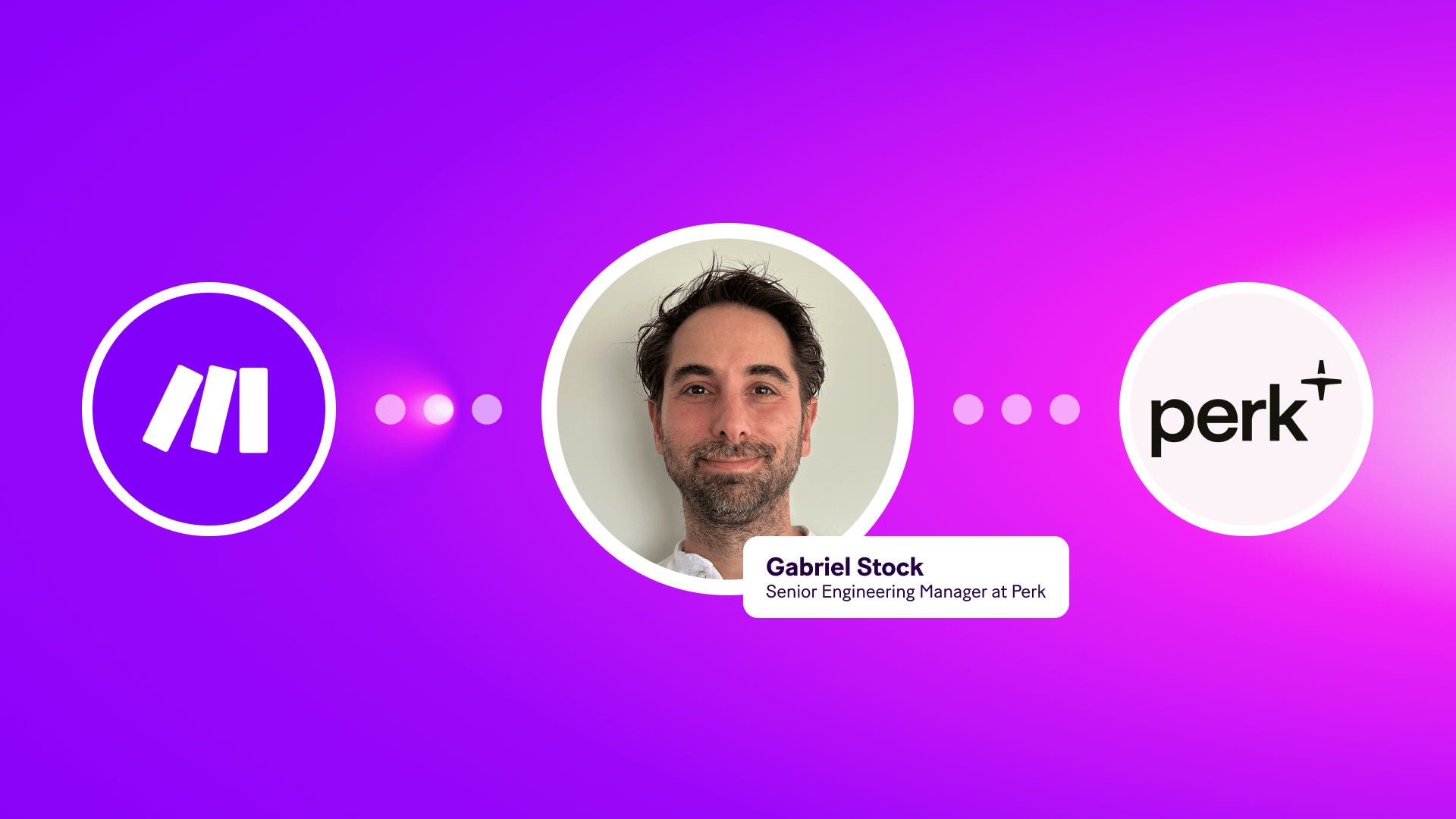
Perk (formerly TravelPerk) is an intelligent AI-native platform for travel and spend, built to eliminate the hidden, manual tasks that drain productivity and morale - Perk calls these ‘Shadow Work’. Headquartered in Boston and London and with over 1,800 employees, Perk is trusted by over 12,000 companies globally to automate travel bookings, invoice and expense processing, and events. As a company built on the belief that automation should eliminate friction everywhere it exists, it was inevitable that Perk would look internally to see where the same mentality could deliver efficiencies. Gabriel Stock, Senior Engineering Manager at Perk, explains that before turning to Make, individuals within the company were using automation tools to remove laborious and time-consuming tasks - but there was an opportunity to enhance the overall structure and ownership.
It was at this point that Perk discovered Make.
So what exactly were the internal challenges that Perk was trying to overcome?
The challenges
As Perk scaled rapidly across multiple geographies, the engineering team needed to empower non-technical departments to own their own operational workflows, without diverting engineering resources away from the multiproduct platform. Make gave those teams the autonomy to solve their own problems, without needing to queue for engineering support.
Stock explains that he wanted to give these internal teams more autonomy. A key challenge was that these teams had some technical knowledge, but didn’t come from an engineering background.
The solution
Once Perk had made the decision to move forward with Make, Stock explains that they kicked off the deployment by offering training to individual departments.
Stock explains that things could be a little chaotic at first - but as teams gained greater knowledge of Make, processes quickly improved, and Perk began to unlock the efficiencies they were looking for. As a result, the company is now moving towards a model where there are Make champions within key departments.
“We’re in the process of opening what we call ‘Automation Engineer’ roles,” explains Stock. “They’re not software engineers, but they are people with technical knowledge, a good understanding of how processes work, and how to map manual processes into automation. We want to build that role as ambassadors embedded into each department.”
The future
Looking to the future, Stock is focused on ensuring strong governance of Make usage within Perk to unlock the best possible outcomes. To do this, he’s looking to assign clear roles to each Make user and is encouraging best practice knowledge sharing within the company. For now, he’s clear on the core benefits of Make to Perk:
Related success stories
Tool and strategies modern teams need to help their companies grow.
AI
How Globant's Head of Innovation empowered 30,000+ employees to solve problems using automation
Read how Daniel Gonzalez, Head of Innovation and AI at Globant GUT, democratized automation for 30,000+ employees, sparking a cultural shift to empower teams to build solutions.

Natalia Mrazova
March 9, 2026

Information Technology
Show, don’t tell: How a Head of Engineering used automation to fuel company-wide transformation
At ChargeGuru, Laurent Salomon had a vision that went beyond fixing technical problems. Read how he harnessed Make’s visual-first platform to change behaviour and fuel progress across the company.
Natalia Mrazova
January 23, 2026
Sales
"Automation unlocks people": How Dude Wipes used AI Agents to build a culture that fuels rapid growth
Read how Zack Means, Senior Operations Analyst at Dude Wipes, used automation & AI to automate 100+ processes, creating a culture that enables a lean team of 40 to run a quarter-billion-dollar business.
Natalia Mrazova
December 10, 2025