Why natural language is the future of AI and workflow automation
Build workflow automations by simply describing what you want. Meet Maia, Make's AI builder that creates automations through natural language conversation.

While methods of building workflow automations have been relatively unchanged for years, technology has evolved dramatically in recent years. This has ignited digital transformation in organizations – including the way we build workflow automations.
The automation methods we’re familiar with may soon be pushed aside in favor of a newer, superior method of development: building through conversation.
The present question: to code or not to code
Currently, if you’re looking to automate your workflows, you’d typically code your automations or build them in a no-code visual interface.
The “code” method generally involves having one or more developers code workflow automations from scratch – though these days, it isn’t uncommon for users to use AI tools to “vibe-code” their automations.
Meanwhile, the no-code approach enables users to connect pre-coded “building blocks” that correspond to their workflow’s actions.
No-code automation has been the long-standing preferred option at Make. It’s democratized workflow automation, enabling moderately technical users to automate their workflows faster and with much less effort.
There are also fewer opportunities for code errors as the no-code tool takes care of the code in the backend.
The status quo isn’t perfect
But there’s room for improving the ways we currently build automations.
In traditional development, we type our code letter by letter, word by word. It’s a potentially effortful and tedious approach. Vibe-coding can speed things up, but if we can’t interpret the AI-generated code, we risk producing an automation whose workings we don’t understand.
As for no-code development, we need to choose our “building blocks,” connect them in the right order, and then set them up with the required app access and data.
If our automation is simple, building it might not take long. This is especially true if we use an automation template in a no-code tool. But building complex automations – ones that involve dozens of actions, multiple conditional branches, and so on?
These can take time as we puzzle over making the automation a reality. And copious amounts of trial and error as we work our way to the end goal.
In the near future, though, there will no longer be a need to follow this pattern.
AI enters the chat
Much has changed since ChatGPT burst into the scene in November 2022.
Through engaging in text-based, “natural language” conversations with ChatGPT and the other AI tools that have since emerged, users have unleashed their abilities to create. They’re producing content, graphics, and talking-head videos. They’re also vibe-coding software.
Organizations that capitalized on generative AI’s capabilities have reaped significant benefits. The gains are as high as 3X more revenue growth per employee, as PwC reveals.
So, if conversing with AI can help organizations create text, art, videos, and even software programs, to massive gains…then why not workflow automations?
Building through conversation
Building automations with natural language isn’t a massive stretch.
After all, we’re already using AI to build software programs. Automations that automate app workflows are just a subset of these programs.
The outcome of building with natural language is also easy to imagine: automating our workflows will be as simple as just saying what you want the automation to do.
For example, you could tell the AI tool, “Whenever I get a new lead from Facebook Lead Ads, I want the automation to log the lead in Google Sheets and send them a WhatsApp message.”
The AI tool parses your request, and then builds your automation – faster than you ever could.
Better still? There’s no need to sign up for a separate AI tool. It lives right within your Make account.
Make automation happen with Maia
Our Maia AI automation builder creates automations (called “scenarios” in Make) from start to finish. It takes our flagship no-code AI and automation capabilities and elevates them by automating the scenario-building process itself.
Just tell Maia what you want your scenario to do and the apps involved. Maia will get to work, identifying the relevant app modules to connect.
Once Maia has built your scenario, you’ll get to review it. With your green light, Maia will connect your accounts and map data to the scenario’s modules. Finally, Maia will test the scenario to ensure it works.
With that, your scenario is ready for use.
Watch Maia in action below:
Maia combines the strengths of vibe-coding and no-code automation. Not only does it speed up the building process with AI, but it also gives you visual clarity on how your automation works.
Our strict security requirements also ensure that the data Maia receives and transmits is secure.
Experience the next evolution in AI and automation
Workflow automation became mainstream when no-code automation technology emerged, and organizations could build automations in user-friendly visual interfaces.
This has been Make’s strength for the last 14 years. We have an incredibly strong track record of helping organizations, large and small, build automations that improve efficiency and scale operations with minimal code.
Now, we’re enabling organizations to adopt AI and automation across all business functions by reducing the time and complexity involved in building automations even further.
No more identifying app modules and connecting them one by one. Just describe the automation to Maia in plain language.
AI has unlocked the next evolution in workflow automation. By building through conversation, manually assembling automations may soon be a thing of the past.
Maia will be available to all Make users – even those on a free account. Join the waitlist for Maia to be the first to experience its power when it launches.
Related blogs
Tool and strategies modern teams need to help their companies grow.
Customer experience
Introducing Maia by Make: Build AI & automation through conversation, transparently
Patrik Simek, CTO and co-founder at Make, introduces Maia, Make's new feature for building automations and AI using natural language clarity, transparency, and confidence.

Patrik Simek
October 16, 2025
AI
Here's everything we announced at Waves '25
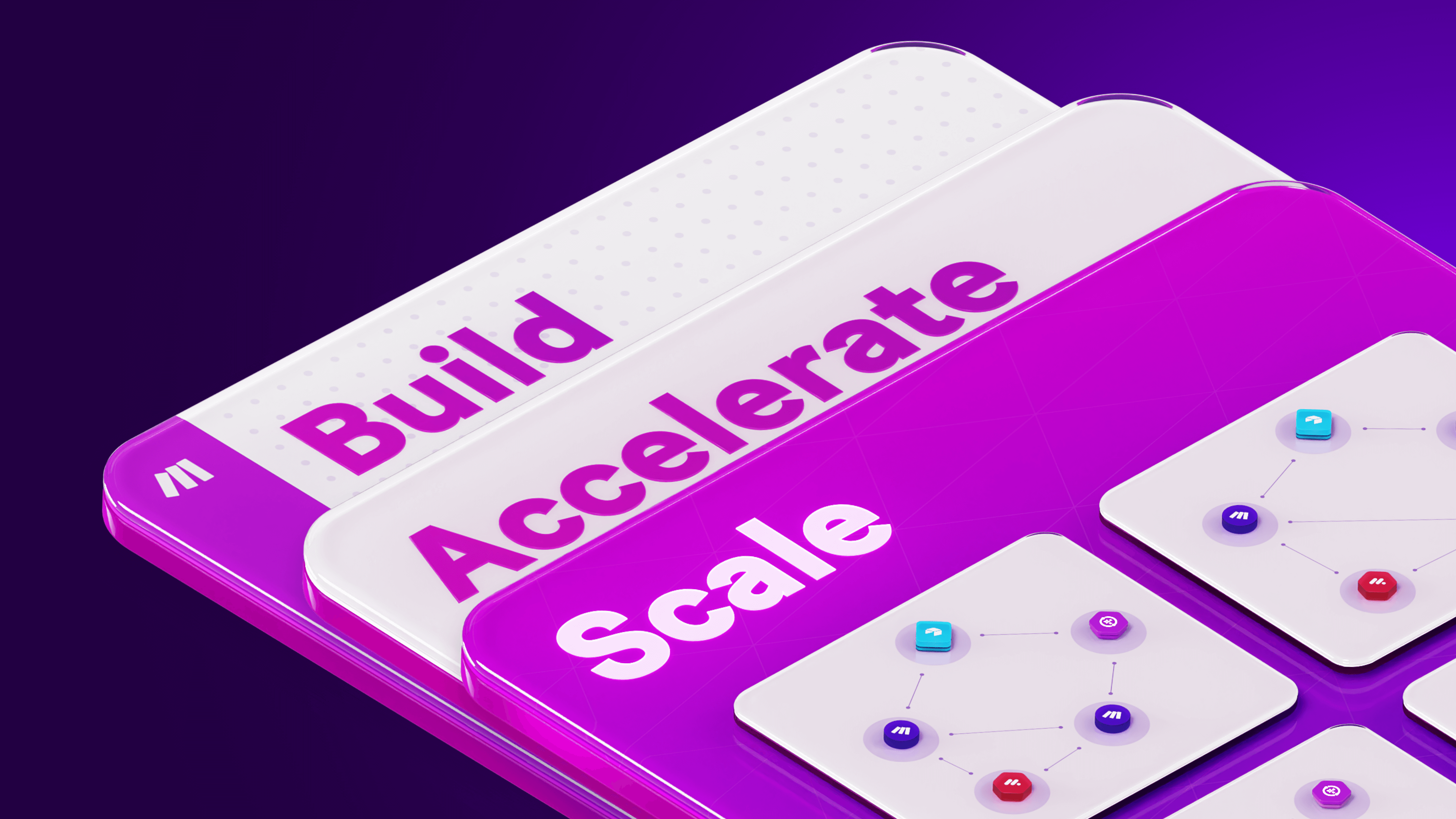
Anton Danilov, Vice President of Product at Make, shares how the three pillars of Make's visual orchestration – build, accelerate, and scale – unlock real value with features released this year and big additions coming soon.

Anton Danilov
October 16, 2025
AI
Make's 2025 in review…and why 2026 will be even bigger for AI and automation
Darin Patterson, VP of Market Strategy, shares how 2025 was a pivotal year for Make and AI as a transformative force – and how the best is still to come in 2026.

Darin Patterson
December 17, 2025