Make's 2025 in review…and why 2026 will be even bigger for AI and automation
Darin Patterson, VP of Market Strategy, shares how 2025 was a pivotal year for Make and AI as a transformative force – and how the best is still to come in 2026.

From the office to the political arena to the holiday table, automation and AI was everywhere in 2025. And one thing that's certain about 2026 is that we'll all be even more immersed in AI. For us here at Make, this gives us almost endless opportunities to help more people make more happen with our unique visual-first tools and ways of thinking. So let's take stock of what Make shipped in 2025, all the incredible things the community built with these advances, and how that sets up the new year to be the biggest yet for automation, AI, and those – like you – who are bringing bold ideas to life.
2025: The year AI became mainstream

The year of AI agents
From its very opening weeks, 2025 was proclaimed the year of AI agents. And as a company at the fore of AI-powered automation, Make was ready to deliver.
In spring of this year, we rolled out Make AI Agents as a way to embed the power of agentic automation more deeply and more capably within your processes. And as more AI players began to adopt the Model Context Protocol (MCP), we launched our own MCP Server to give our users the full flexibility to call external tools with the control, security, and precision of Make.
But we also delivered a key feature that no other workflow automation platform even comes close to: Make Grid. In development and testing since 2024, this year brought Make Grid to all of our paid users as the visual way to control an automation landscape that's both more powerful and more complex thanks to AI agents.
In other words, formidable additions to the Make platform made a new, agentic environment possible. But that potential wouldn't mean much without the will, skill, and ideas of you, our incredible community.
Harnessing global enthusiasm
The eagerness to get hands on, learn more, and get results was palpable all year. It was also worldwide: the abundant opportunities to meet up with AI enthusiasts from different backgrounds and geek out about what they're automating made this year feel more like an AI-fueled vacation.
With the Make AI World Tour, for example, we organized workshops, hackathons, and meetups of all kinds to get people talking, thinking, and building. As of this writing we've organized 48 events from Texas to Thailand, and by year's end we'll have held the equivalent of an event a week.
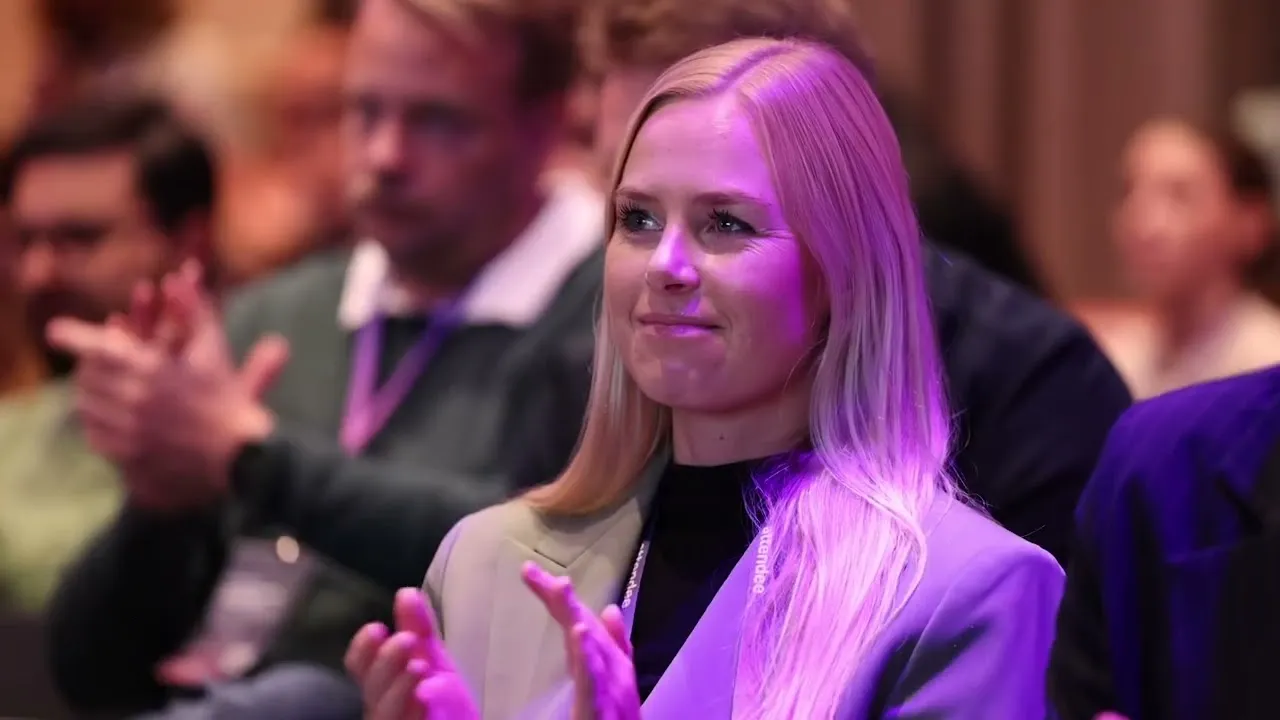
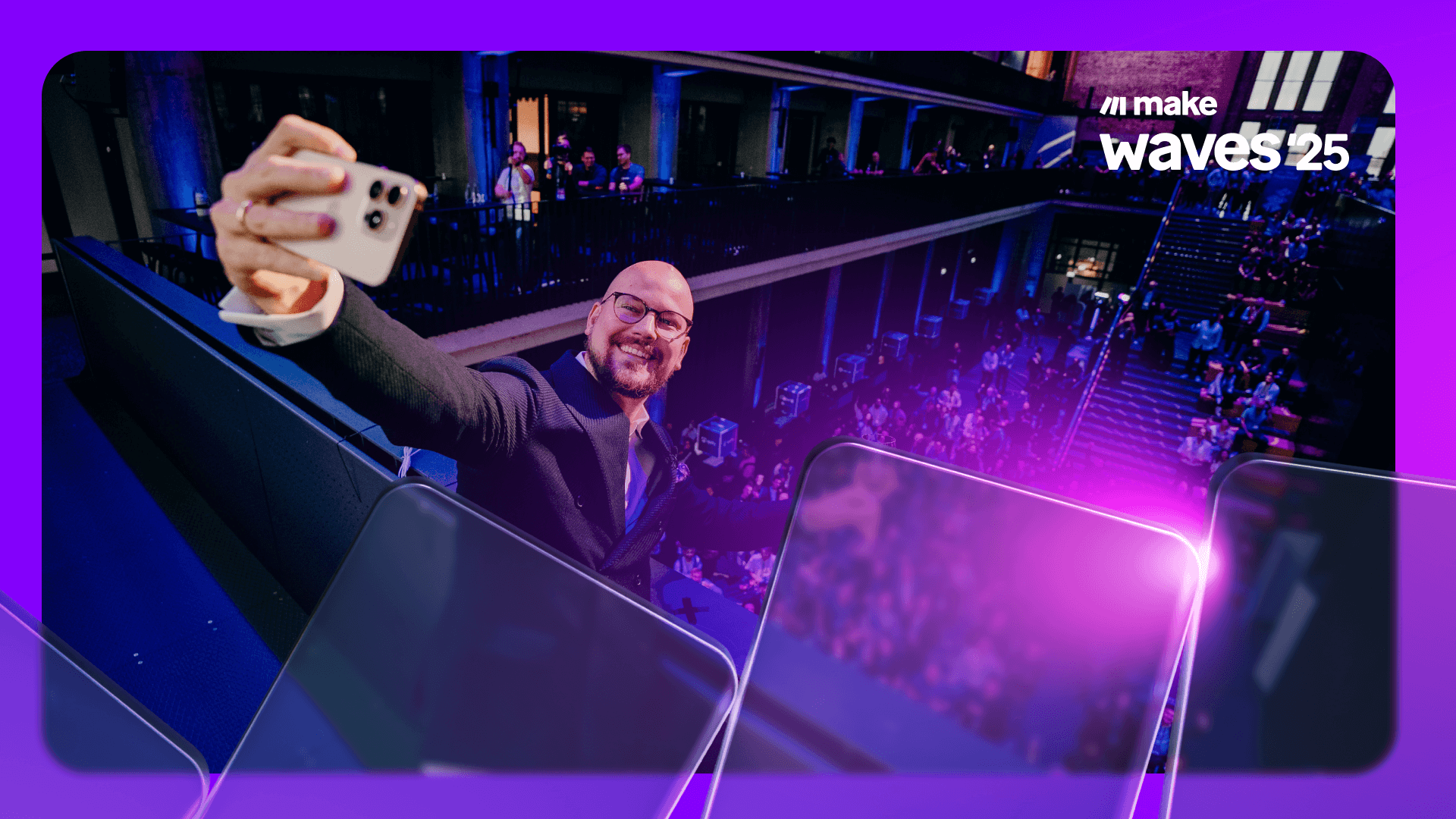
But the highlight of the Make calendar is always our annual customer event. Waves '25 was our biggest yet, bringing together over 700 Make enthusiasts from around the world in Munich. Thanks to this wealth of hands-on know-how, 16 product-related updates, and 17 structured sessions, we were able to swap ideas and insights about the best ways businesses of all kinds can get to value with AI.
But one thing numbers can't fully capture is the energy generated by hundreds of innovators gathering in one place and buzzing with ideas – "electric" barely comes close.
Connecting with value-creators
This power of real, tangible stories from our community was one of our most important learnings this year. 2025 was a chance to share stories of real Make users who were putting Make plus AI to work and getting real results.
As someone who has been lucky enough to help and witness customers innovate with automation for years, even I was astounded by the sheer scale of some of these success stories. For example, Celonis used Make to do what a $50,000 program used to, while Greyt harnessed AI to automate their client's document processing – both showed stunning cost savings of 99% or more.
Create your own AI success story
Learn how to realize the full potential of AI in your organization and get practical steps for every stage of your AI journey with Make's AI Playbook.
But the personal stories from people able to self-actualize thanks to Make are what really drove home that 2025 was a watershed year. From tiny companies doing the work of huge teams without breaking a sweat to nonprofits making real change in the world, Make is helping real people make big things happen by putting AI power in their hands.

The story from the past year that sticks with me the most comes from one of our most dedicated users. Eduardo Cifre Sanchez listened to the real challenges his rural community was facing with digitalization and built a voice- and agentic AI-powered solution for Spanish farmers' invoicing needs. He combined apps and leveraged AI to save time, remove the need for expensive accountants, and improve the quality of life for dozens of small businesses. Crucially, he also did so in a way that's approachable and understandable by the end user. Make is what allowed AI to interact with the real world not as a threat or a shiny new object but as a positive, transformative force in even the most unlikely of industries.
What brings us the most joy is that the advances introduced in 2025 empowered you to unlock these kinds of inspiring, real-world automations and push the boundaries of what’s possible. But this year was only the start: in 2026, everyone will need to follow these trailblazers' examples.
2026: The year AI moves from promise to performance

If 2025 was the year of the AI agent, 2026 will be the year businesses turn that potential into tangible value on a broad scale. Organizations will move beyond experimentation to reliable AI-powered automation that quietly powers productivity, decision-making, and innovation: the coming year will mark the point where companies start measuring AI not by its novelty, but by its impact on efficiency and outcomes.
This will mean tangible progress across industries. In marketing and sales, AI will orchestrate campaigns, qualify leads, personalize outreach, and optimize customer journeys in real time. In professional services, it will manage workflows, summarize insights, and surface opportunities, freeing teams to focus on strategy. In customer-facing sectors, seamless, personalized experiences will be powered by automation working quietly in the background.
But these transformations won't just come into being. Here's what companies like Make will be doing behind the scenes next year to make these giant leaps possible for all.
Hear more from Darin
These topics and more were the focus of a recent webinar held with Darin and other Make colleagues. Check out their conversation now to get even more predictions.
Maturing into scalable AI
Most of all, maturing technologies will underpin a shift to value.
While MCP was introduced and widely adopted in 2025, this standard will undergo significant maturation and stabilization in the year to come. Businesses will seek increased confidence and reliability by gaining more precise control and auditability of MCP usage by AI tools.
In 2026, I also predict the Agent2Agent Protocol (A2A) will take a course similar to MCP in 2025. This advancement will enable businesses to begin to lay the real foundations for AI agents to communicate and collaborate seamlessly, enabling multi-agent architectures that can be managed at scale. Such architectures will allow agentic applications to maintain specific areas of focus while also coordinating work across broader business processes and functions. This protocol will move from theory to initial adoption and will thus support real work processes.
The growing need for context
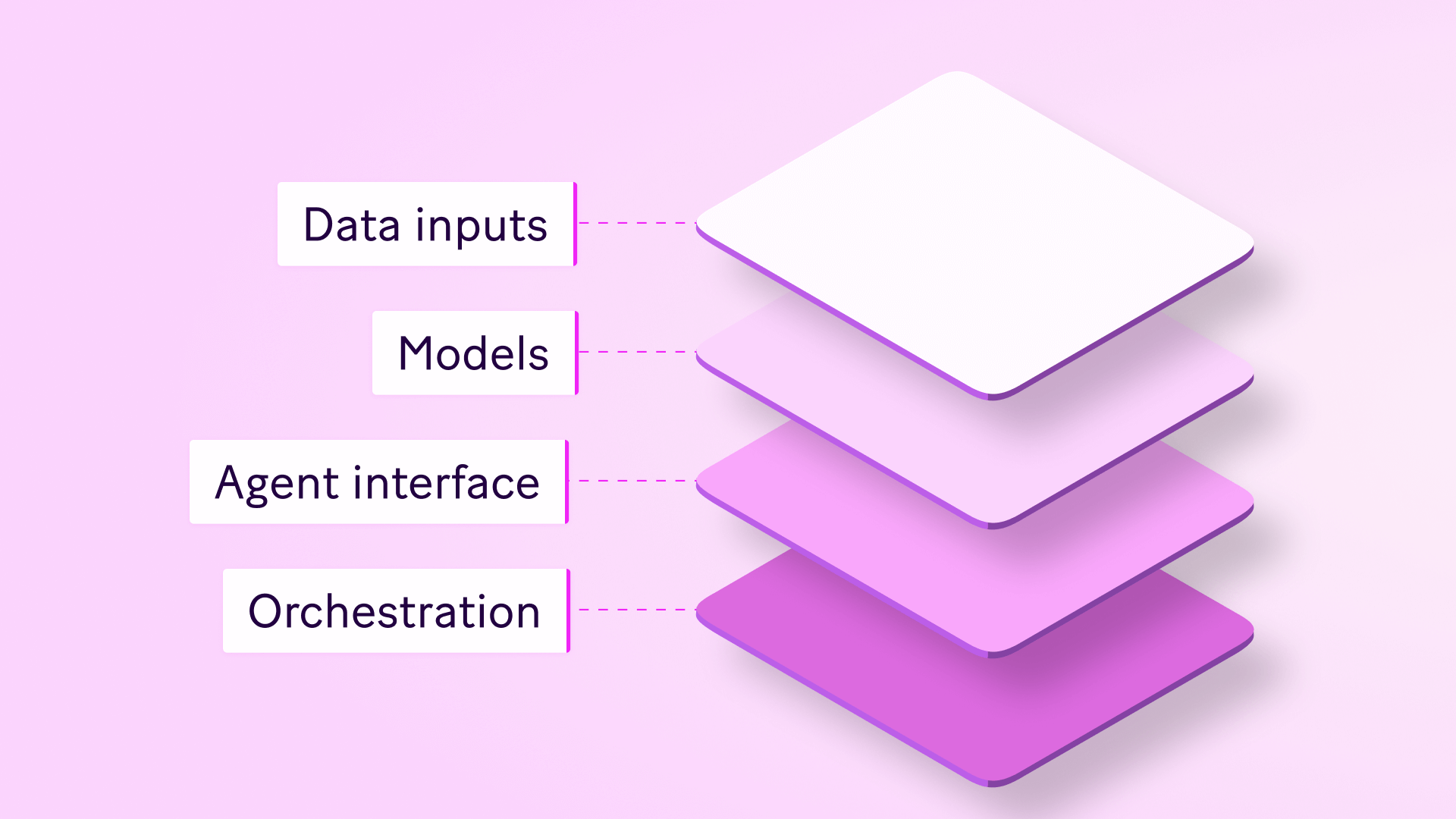
But to fully capitalize on the new ways agents can use tools and collaborate, AI agents and even simpler LLMs will need huge amounts of context. Sector knowledge, role knowledge, customer info, well-defined policies, and more are required for AI coworkers to make good decisions.
As I've written about before, AI agent systems are very good at collecting and recording nuanced kinds of data and interpreting them more flexibly. In some ways, this makes it less of an issue for data inputs to be perfectly consistent and in perfect quality. However, in 2026, businesses will need to get much better at providing this context. This will demand reviewing internal processes, documentation, security, and governance processes, then making this all available to agents. Organizations will have to link together internal data sources securely and fine-tune how agents use them to make decisions.
Real-time agent–human work
MCP, A2A, and internal data sources – what ties these all together is the idea of interconnecting previously disparate parts of the work we do. To empower AI to go beyond just chat-type interfaces and to achieve actual agentic capabilities, these connections need to be made in ways that make sense to humans and support human ways of working.
I expect this will manifest in a real mental shift: people will start thinking about their work in terms of workflows.
Especially for white-collar employees, it may be challenging to think of what you do as a "workflow." But in fact, much of our day-to-day consists of collections of tasks that can be broken down, sequenced, and repeated. Take your morning routine: make a cup of coffee, read an email, reply to the email, repeat.
But even if you start your workday almost on autopilot, there's still a drain: gathering all the pieces and keeping everything organized. Here, AI and automation will act as vital support in coordinating, routing, and tracking information – the human skill of knowing the details to plug in and to check for the outcomes will remain key.
In other words, we should expect to see organizations experiment with more human-in-the-loop approaches and more "hybrid" work – humans working alongside powerful agents. This is what will unlock real value personally and at scale.
Making AI accessible to everyone
As these technologies and ways of working evolve and become more familiar, the complexity of AI will fade. This is not to say that AI itself will become less capable or less important – quite the opposite. Instead, key AI concepts and capabilities will become more accessible.
Put another way, hands-on practitioners will be able to make use of AI without the expectation of going deep into the technology that underpins it. AI embeddings and prompt engineering, for example, will be built into off-the-shelf tools, abstracting the complexities typically needed to successfully apply these technologies.
This dovetails perfectly with Make's no- and low-code DNA. That's why we're already testing new product features and improvements that directly support this shift.
Maia will enable you to build automations and AI solutions end-to-end, just through natural conversation. It's a faster way to create, a smarter way to get started with AI, and – in classic Make fashion – a visual control center for your automations. Big picture, Maia is how automation, AI, and the powerful technologies they knit together will truly become accessible to all. I can’t wait for our team to launch this next year.
We're also at work on a new generation of Make AI Agents. Shortly they'll be fully integrated into the core Make Scenario Builder and will come with a redesigned UI, a reasoning panel, and multimodal inputs like documents, images, and audio to give them the info they need for the most accurate outcomes. They'll be more shareable and more reusable, allowing organizations to build entire libraries of agents to do more work better, all overseen with even more clarity.
Make it happen in 2026
The overarching idea to look forward to is that the power of AI and automation will continue to rise while complexity will fade. The result will be smaller businesses and non-technical teams deploying automation quicker and seeing results faster.
I was blown away by what I already saw you building this year, and I was moved that you chose to build it with Make. I'm confident the best is yet to come in 2026 – let's go bigger, together.
Related blogs
Tool and strategies modern teams need to help their companies grow.
Customer experience
Introducing Maia by Make: Build AI & automation through conversation, transparently
Patrik Simek, CTO and co-founder at Make, introduces Maia, Make's new feature for building automations and AI using natural language clarity, transparency, and confidence.

Patrik Simek
October 16, 2025
AI
The next generation of Make AI Agents: Visual, transparent, reusable
Sebastian Mertens, Head of Applied AI at Make, shares how the next generation of Make AI Agents will be as visual and intuitive as every other part of Make.

Sebastian Mertens
October 16, 2025
AI
Here's everything we announced at Waves '25
Anton Danilov, Vice President of Product at Make, shares how the three pillars of Make's visual orchestration – build, accelerate, and scale – unlock real value with features released this year and big additions coming soon.

Anton Danilov
October 16, 2025
AI
The biggest ideas out of Waves '25
Missed Waves '25, Make's annual customer event? Attended but couldn't quite fit every session into your schedule? Here's a summary of just some of the insightful topics discussed by speakers from Make, Meta, FranklinCovey, Webflow, and more.

Matt Jones
October 24, 2025
People
5 big numbers that made Waves '25 Make's best event yet
Dan Etheridge, Head of Brand at Make, wraps up this year's Waves '25 with stats and thoughts about all the people who joined together to make this year's annual customer event insightful, valuable, and fun.

Dan Etheridge
October 31, 2025
AI
Introducing Make AI Web Search: Real-time internet data, directly inside your scenarios
Introducing Make AI Web Search – a built-in module that lets you pull real-time web data directly into your scenarios. No APIs, no scraping tools, no external accounts. Search the internet and automate what you find, all inside Make.

Michael Nketsiah
December 8, 2025
Workplace productivity
Connect to any API faster with Make’s new HTTP app
Tereza Klobouckova, Product Manager at Make, shares the new features in the HTTP app – and how it makes your automations more flexible and customizable than ever.
Tereza Klobouckova
December 2, 2025