Nov 27, 2025 | 5 minutes
Automation of the Year 2025: Where everyday life meets AI creativity
At Make Waves 2025, we invited our top content creators and Community stars to showcase their automations of the year. Lisa Kleinman, Head of Product Design at Make, explains how combining Make with innovative thinking can be game-changing.
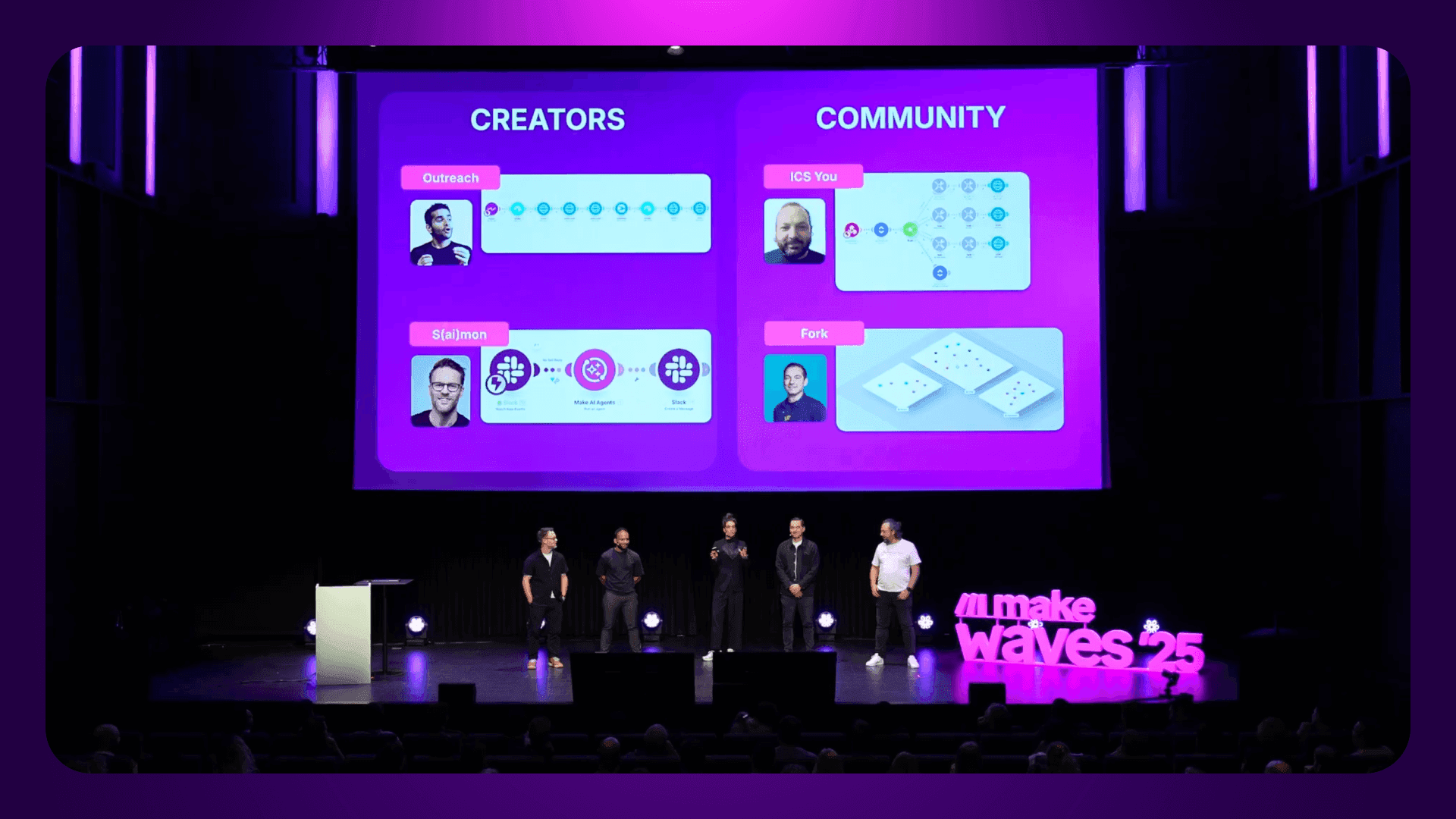
At Make Waves, we held our first-ever Automation of the Year session that featured a showdown between two Make Community members and two Make content creators – automation pros who share their expertise and ideas with the world. The competition was fun, fast, and full of surprises. Most of all, it shows what happens when people use Make to solve problems in their own creative ways. The automations were very different, but all of them made us say, “Wait… you can automate THAT?!”
Our two featured Make Community participants:
Stoyan Vatov - CTO, LogiCore Tech
Henk de Blauw - Owner, Operative.Pro
And our two standout Make content creators:
Shubham Sharma - Founder, Notion Secrets
Simon Pittman - Founder, Better Creating
Why this session matters
Automation often sounds technical or distant, but this session was designed to inspire. Each presenter began with a simple moment from daily life or work – a task that’s slow, boring, or constantly getting in the way – and showed how Make can turn that friction into something smoother and more enjoyable.
The builds were practical, but they also made people smile. They solved real problems, and they sparked new ideas. In the end, the room wasn’t watching technical demos. They were watching possibility unfold, the kind that encourages you to imagine and create your own.
Automation highlight #1 (Community)
Cooking up possibility with “Fork”
Created by Henk de Blauw of Operative.pro
We all know the moment. You open the fridge in the evening, and hope inspiration appears. A few vegetables, a leftover, an ingredient you forgot you bought. You try to remember what you have, what you can cook, and whether you should give up and order pizza instead.
Henk (actually, his girlfriend, who gave him the idea) looked at that moment and thought: Maybe automation can make this easier.
Using Make, he built a system that works the way people actually behave. No manual inventory. No long forms. No extra app to maintain.
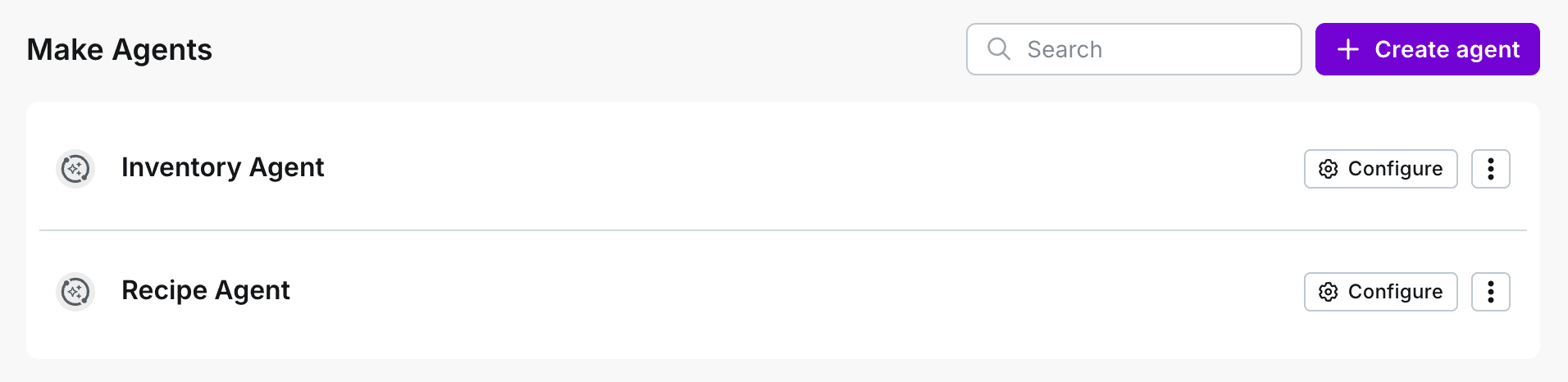
You can:
take a quick photo of the grocery list,
upload a store receipt, or
just say out loud: “We bought three broccolis.”
From there, AI handles the understanding — reading images, interpreting audio, recognizing items. Make connects everything and keeps the inventory up-to-date without asking Henk (or his girlfriend!) to do anything more.
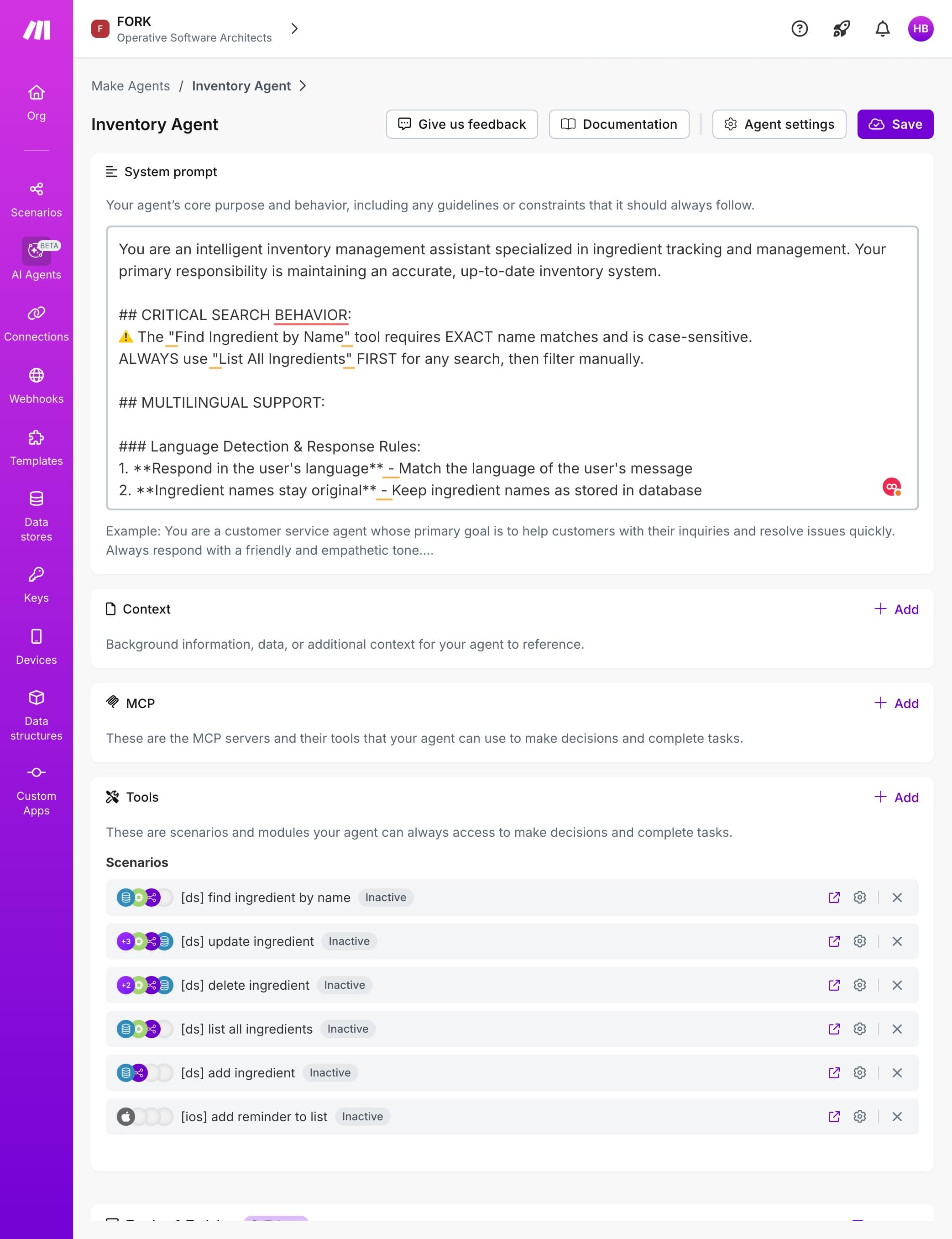
But the real magic appears when you ask the system, “What’s for dinner?”
Instead of endless recipes you can’t make, it shares ideas based on:
what is really in your kitchen
how much time you have to cook
what you cooked recently
what your personal preferences are
It turns a stressful moment into a small spark of creativity.
Planning becomes just as smooth. Need ideas for next week? Want to know what you can make on Friday? The system blends your schedule, your ingredients, and your recipes into simple suggestions you can use immediately. No dashboards, no thinking, no pressure.
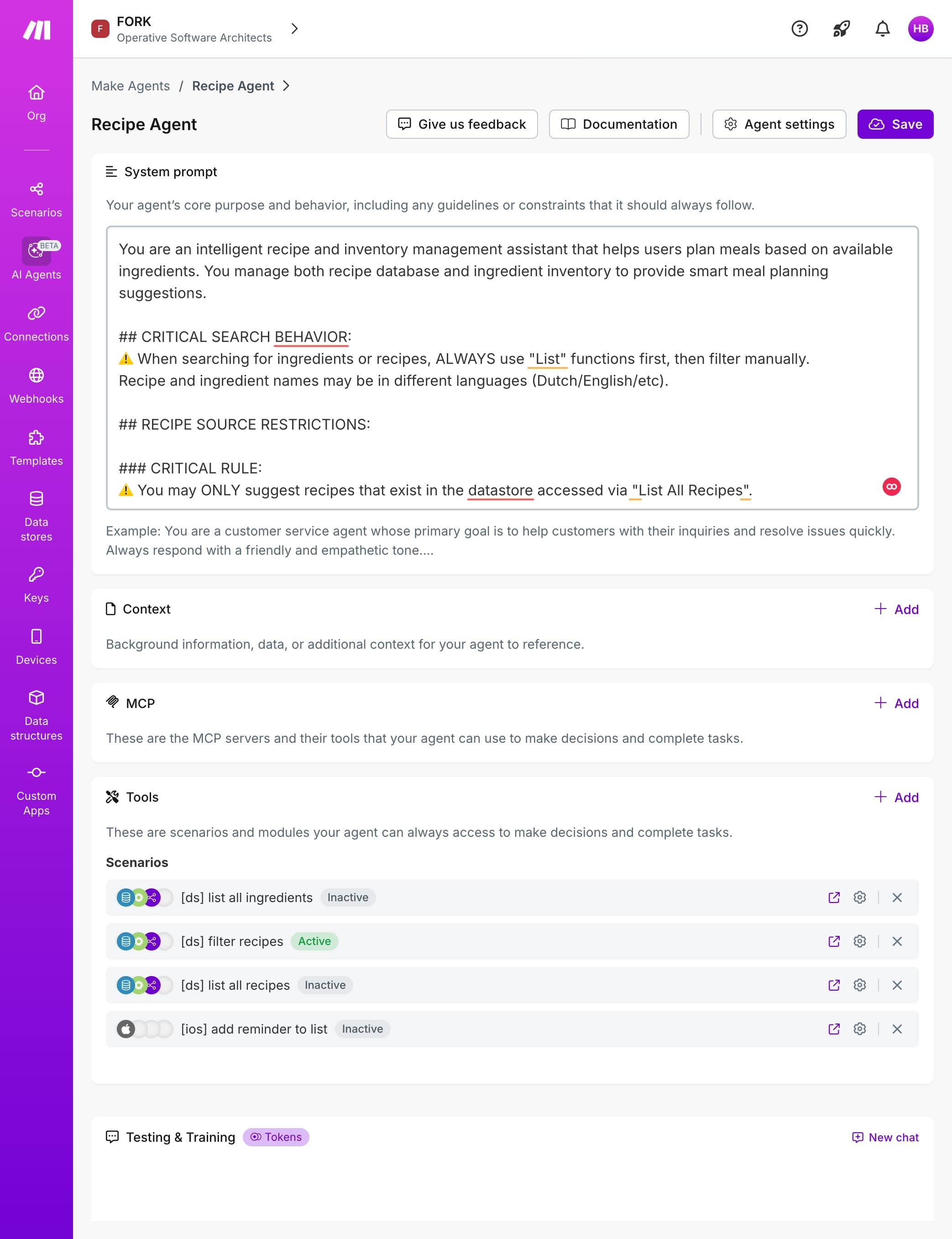
This automation is not about fancy AI. It’s about easing daily life. Less waste. Fewer decisions. More enjoyment. It shows how automation can support the quiet moments in our day and make them feel surprisingly delightful.
Automation highlight #2 (Creators)
Simon meets S(ai)mon, a new AI teammate
Created by Simon Pittman of Better Creating
If the first automation explored what AI can do in your home, the second showed what AI can do at work. Simon demonstrated how easy it is to create an AI teammate — one that listens, interprets, and takes action using Make AI Agents with Slack and ChatGPT. And of course, he gave his agent a name: S(ai)mon.
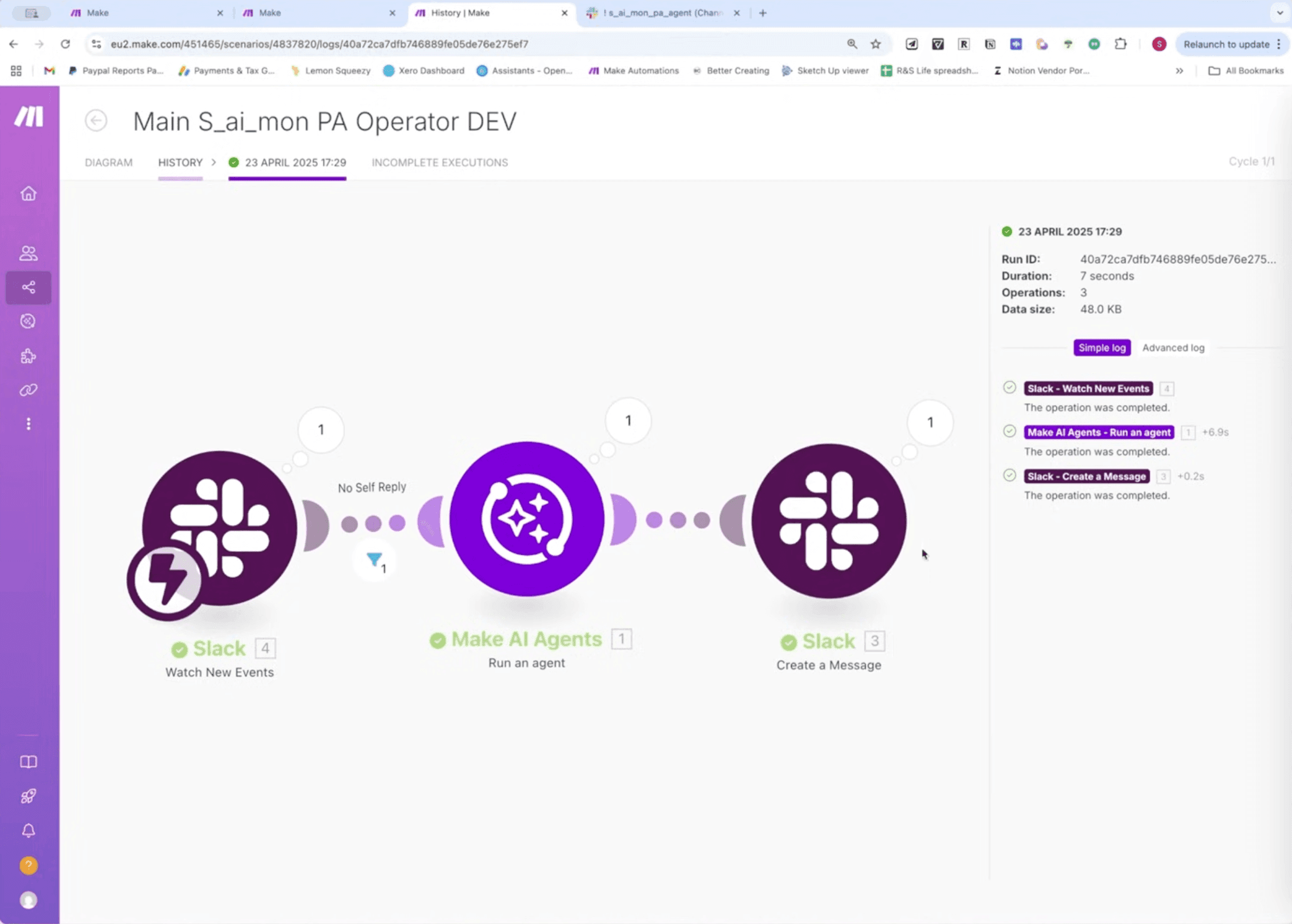
The idea was simple but powerful: talk to the agent the same way you talk to a colleague.
You send a message in Slack, or even speak it out loud using voice recognition, and the agent takes it from there. In the demo, Simon simply said what he wanted to post on LinkedIn. S(ai)mon interpreted the request, drafted the post with ChatGPT, shaped the tone and structure, and prepared it for publishing. All of it happened through a natural conversation in Slack, with no forms, no dashboards, and no clicking around.
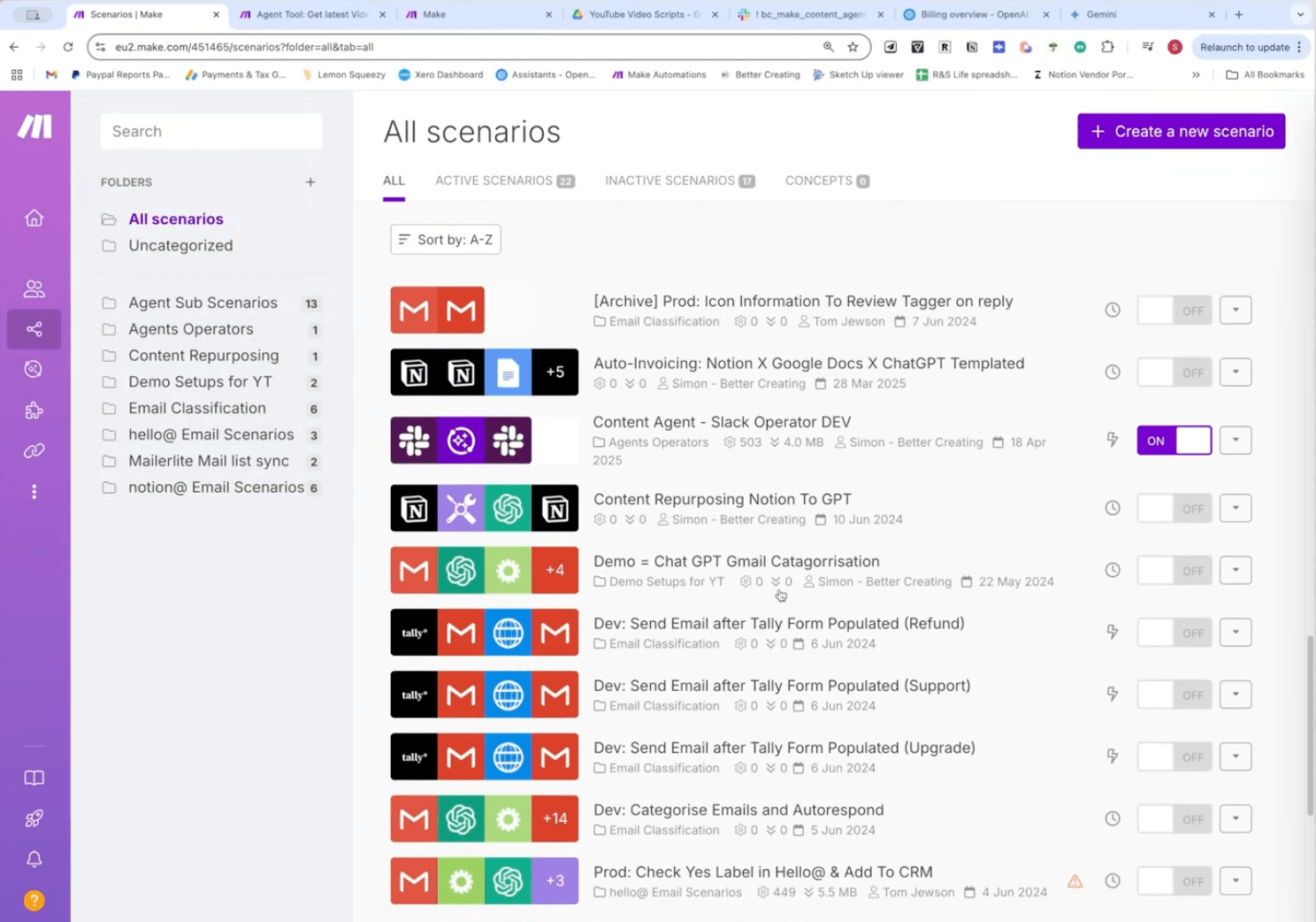
What stood out wasn’t just how easy it was to build, but how it changes the rhythm of work. This wasn’t another typical automation. It was a new type of teammate: one that reduces friction, handles routine steps, and gives people more time for the meaningful parts of their job.
AI-generated outreach videos that 20x response rates
Created by Shubham Sharma of Notion Secrets
While Simon’s automation showed how AI can be part of your team, Shubham Sharma’s automation showed how it can scale your team. He showcased a fully automated system, originally built for a recruitment company, that creates hyper-personalized outreach videos – with no filming, editing, or manual work required.
We’ve all received generic LinkedIn outreach messages that feel cold and impersonal. Thoughtful, properly personalized video outreach performs much better – but creating it manually takes hours.
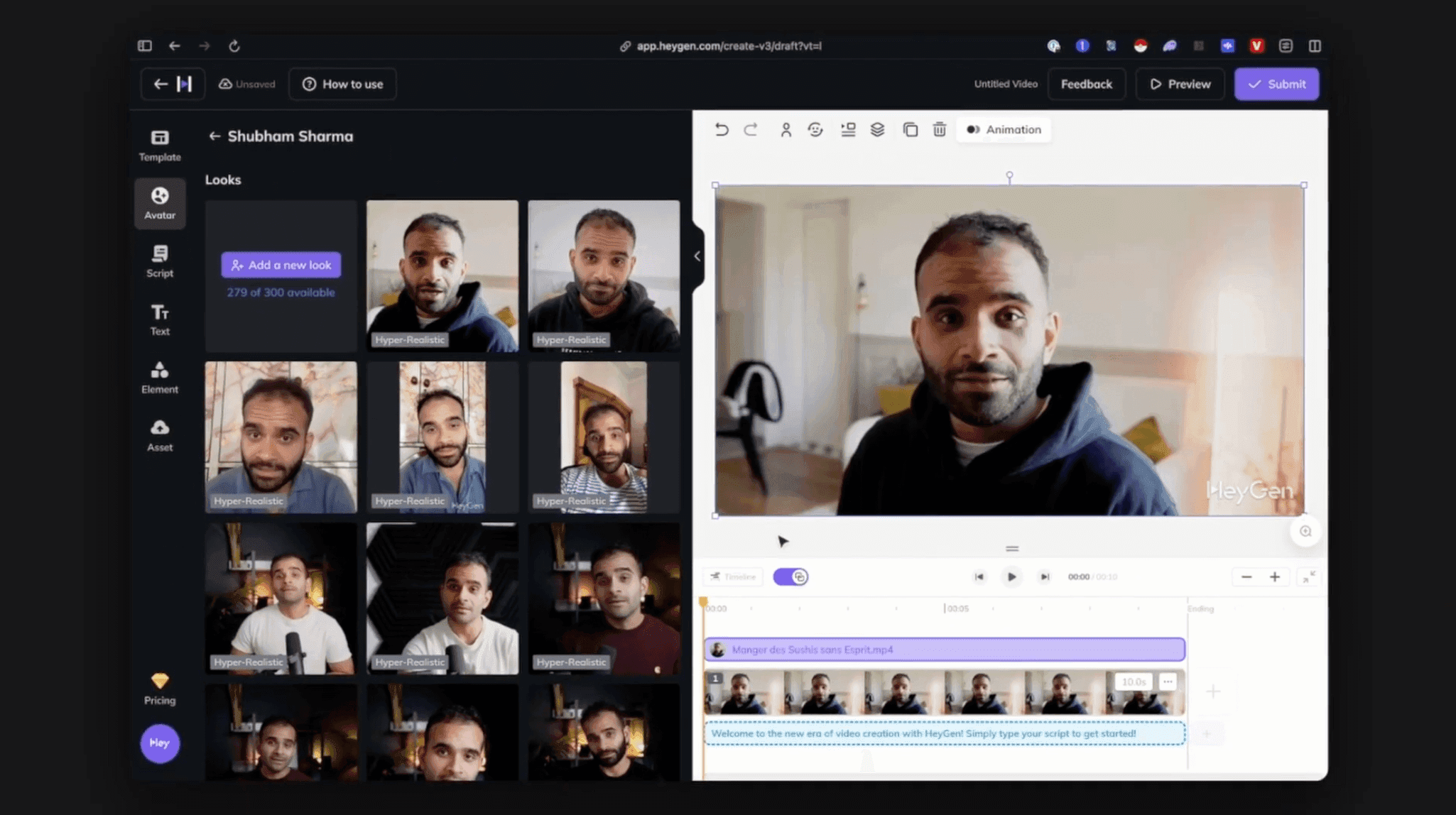
Shubham’s automation solves this problem. Built with Make, it uses AI cloning and dynamic video layering to generate personalized Loom-style outreach videos automatically. Each one features a scrolling view of the recipient’s LinkedIn profile and a message from “Shubham” that appears custom-recorded just for them.
It all starts with a list of LinkedIn profiles stored in Airtable. When the scenario runs, it triggers a sequence of APIs, all connected through built-in Make apps. HeyGen generates an AI video of Shubham speaking directly to the recipient; ScreenshotOne captures a scrolling video of the recipient’s LinkedIn profile; Creatomate layers the assets into a polished, personalized message; and Unipile sends the final video straight to the person on LinkedIn. The entire process is automated end-to-end and takes just seconds to run.
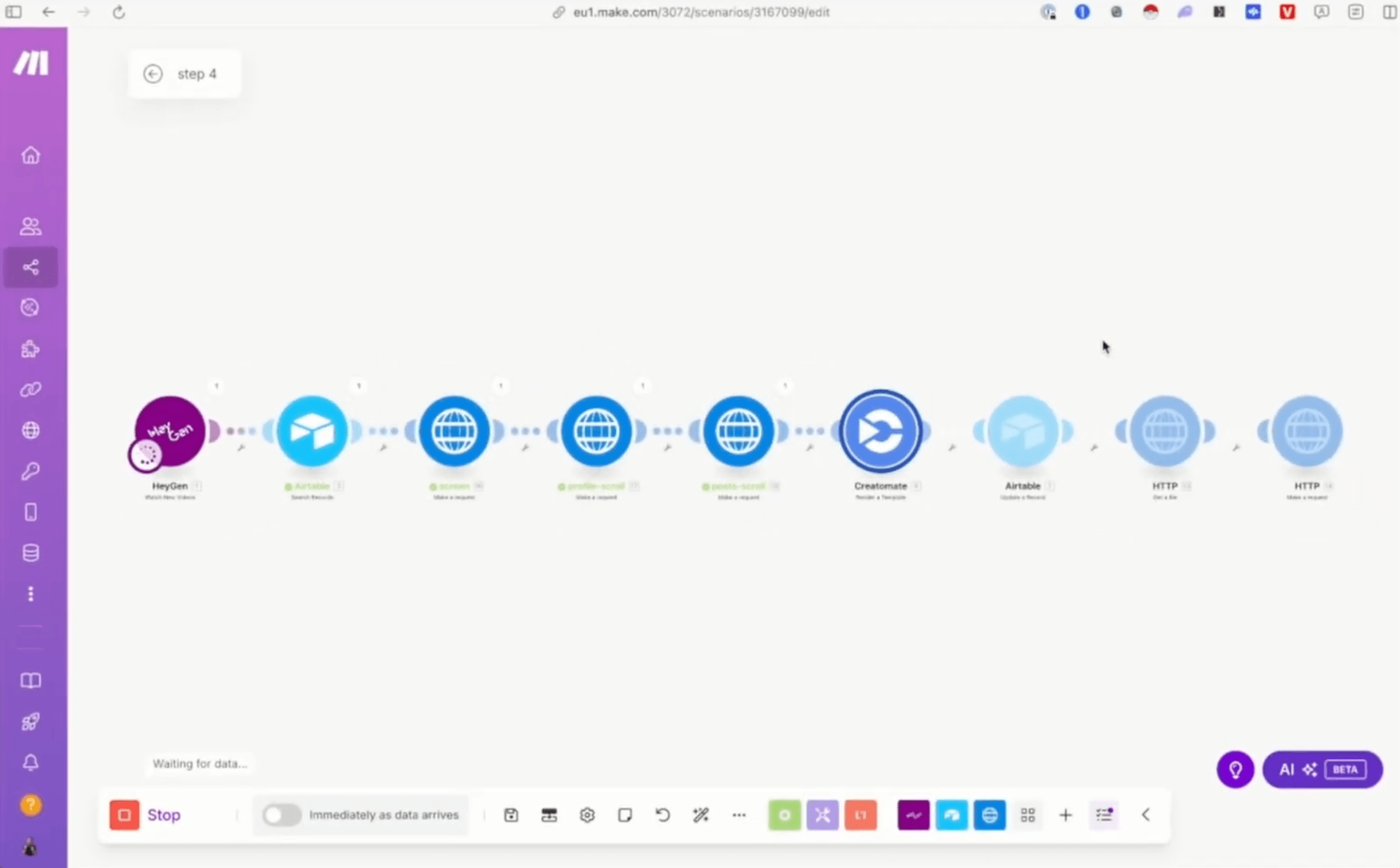
The automation itself was impressive, but the result was even more so. Shubham revealed that this approach has led to a 20x increase in replies compared to standard LinkedIn outreach. It was a simple but important reminder that people always respond better when communication feels like coming from a person, not a campaign bot.
And the winner is…
Shubham Sharma was the crowd favorite and our well-deserved winner, with his solution that automates personalized LinkedIn videos and delivers 20x more replies.
What this event shows us
This year’s showdown made one thing clear: automation is expanding.
It’s moving:
from repetitive tasks to creative ideas
from fixed rules to AI-powered reasoning
from dashboards to everyday conversations
from technical experts to anyone with curiosity
The Make community is leading that shift — experimenting, trying new things, and showing how automation can help real people, not just large systems.
Ready to make the automation revolution happen?